
Dear Reader,
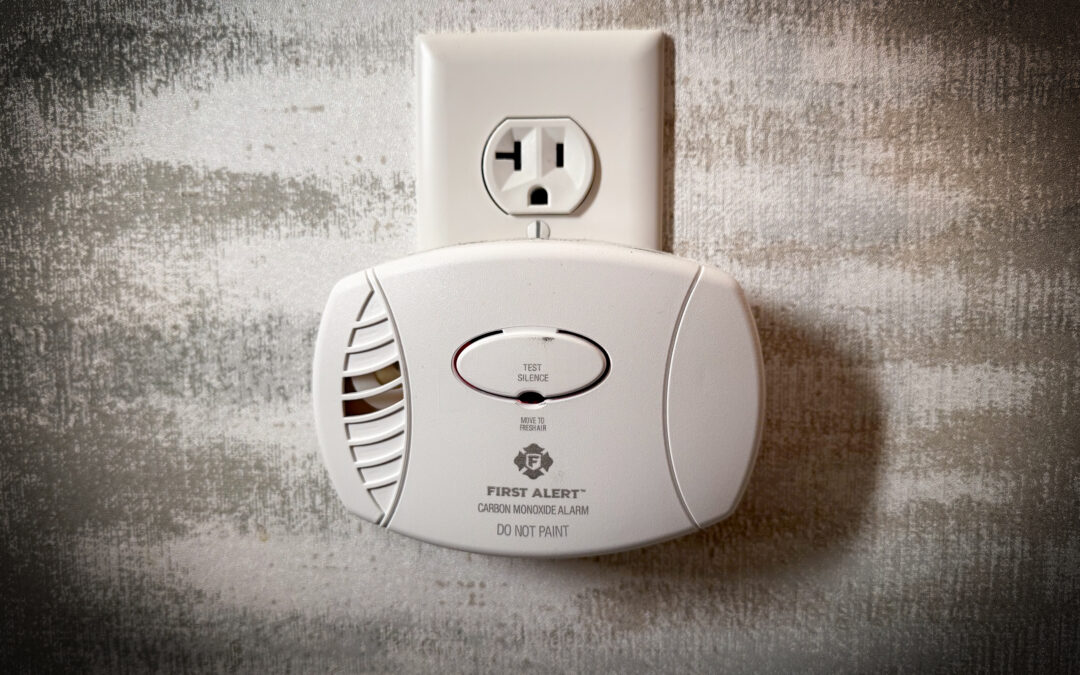
I hear this question from time to time. I’ve put together a list of sources of carbon monoxide (CO) for you to consider. If you’re absolutely sure you’ll never come across any of them, you might be OK without the CO detector. Just remember, CO exposure is often the result of accidents or ill-thought-out decisions people make under duress (e.g., power just went out and it’s freezing outside).
First, a couple things to remember about CO:
- CO has no smell and it is invisible and tasteless, so you won’t know it’s there until either significantly bad things start to happen (see next bullet), or your trusty CO detector alarm goes off.
- CO can kill; h-yikes! A large dose can kill a person in 3 min or less, whereas a smaller longer dose can kill over 3+ hours. A tiny dose may simply cause the following symptoms: headache, nausea, dizziness, confusion and shortness of breathe. For a more comprehensive list of symptoms, check out this article from the Mayo Clinic.
- As mentioned in the article, if CO poisoning doesn’t kill a person, there can be long-term symptoms including memory loss, personality changes and movement issues.
- Children and the elderly are especially susceptible to CO.
- If you suspect you may be experiencing CO poisoning, get to fresh air immediately (e.g., run outside) and call 911.
Below are some causes of unexpected CO exposure. Note – I suggest not clicking the article links below if you’re sensitive to news stories about death.
- Power goes out and a temporary power source is put in place, such as:
- A temporary generator – temporary generators may give off a good deal of CO and it is very important to set up these generators where none of the CO generated will be anywhere near a building. Here’s an article about 12 people dying in 2024 from an ill-placed generator that was used when the electric went out.
- A kerosene powered space heater – kerosene powered space heaters can also give off a good deal of CO. Any appliance that uses kerosene indoors must be exceptionally well ventilated to remove the CO it generates from inside spaces. Better yet, do not use these types of appliances inside. (I searched online to see if these are actually still commercially available, and they most definitely are!) Here’s an article about 2 people dying and 2 getting extremely ill in 2021 due to use of kerosene space heaters in a small unventilated space.
- Using a creative form of heating / cooling like:
- Sitting in your gas-powered car in a garage with the heat or AC on. If you want to heat up or cool off in a car – do it when the car is OUTSIDE ONLY. Here is an article detailing the death of woman from CO poisoning in 2024 when she went in her car to cool off with the AC, while it was located in the garage. Check out the section of the article about how CO detectors in the connected building went off and that’s how she was discovered and other people knew to get out of the building to stay safe.
- Using a gas oven to generate heat in the house. This is a bad idea. Consider baking something rather than just leaving an empty oven on for a long period of time so that carbon monoxide stays inside the oven and can’t spread around your house. Here is an article describing the death of a couple in 2016 from heating their house with a gas oven.
- Bringing an outdoor grill or similar combustion device into the house to generate heat. This is an even worse idea. Here’s an article from the 2021 power outages in Texas. It covers a lot of ground regarding different types of reported CO poisoning. The section entitled “Pleading for help” includes a story of a family under duress bringing a grill inside for heat in an unexpected cold weather situation and everyone getting extremely ill from CO poisoning.
- Vehicle idling: I’ve already included a story above of vehicle idling causing CO issues when a vehicle was used for cooling relief. There are many other instances where idling vehicles can cause CO issues, including cars parked near or in buildings that are waiting for passengers to be picked up, pre-heating a car in the cold before leaving, or even cars being turned on remotely and running by accident in closed garages. CO from these instances can drift (as air does) in through windows, doors or other openings in a building and build up inside enclosed spaces. Here’s an interesting article from 2018 regarding keyless ignition cars and how cars could be left on by accident – resulting in at least 28 CO poisoning deaths recorded as of the date of publication of the article.
- Combustion equipment: there are many types of commonly used equipment that are combustion based, like certain lawnmowers, snow blowers, chainsaws, etc. When these are used or left running in an enclosed space, there is a risk of CO poisoning. Here’s an article from 2019 regarding a landscaping company being fined for not properly educating their employees about the dangers of CO after two of them died from CO poisoning from a gas-powered mower.
- Accidents or aging of combustion-based building systems: without a CO detector, it can be near impossible to detect if a little bump to the furnace or other combustion-based equipment in a building has resulted in a CO leak. It is important to have this type of equipment maintained regularly to catch issues that could result in CO leaks. Here’s an article from 2024 about a family with an oil furnace with an accidentally disconnected exhaust pipe where at least one person died and the others were hospitalized for what is suspected to be CO poisoning. In the same month, actress and model Dayle Haddon and her husband died of CO poisoning from a faulty flue and exhaust pipe on a gas heating system in their house – here’s an article on this event.
- Blocked up chimneys: while fireplaces can be a cozy addition to a house, if they don’t have a properly cleaned and cleared out chimney, then CO from the fire has no place to go but into the house. Here’s an article from 2018 about a building where a teenager was killed and roughly 35 others were treated for CO poisoning due to an issue with a chimney.
Accidental CO exposure can happen at home, at work, or abroad. It is more difficult to control accidental CO exposure when you are traveling, so some people travel with a portable CO detector. (You might find this article regarding 19 CO deaths reported at AirBNBs over the past 10 years interesting.) Basic CO detectors are not terribly expensive – you can find models online or in stores for about $20. Portable CO detectors you can take on the road may be slightly pricier at around $30-$40. The EPA has a page with useful information on CO detectors (i.e., care, installation, placement, etc.) that may be useful to you if you decide to install detectors in a building.
Be safe and make good choices!
M
Photo: Tony Webster, CC BY 2.0 <https://creativecommons.org/licenses/by/2.0>, via Wikimedia Commons